Transporting a Car on a Tow Truck in Winter: How to Prepare the Trailer and Hit the Road Safely?
Transporting a car in the fall and winter requires proper preparation. Shorter days, rain, snow, and slippery roads can make both loading the vehicle and the journey itself more difficult. Whether you’re taking a car to a repair shop, transporting a newly purchased vehicle, or transporting vehicles professionally, choosing the right tow truck and securing the load properly are crucial.
Find out how to prepare for shipping during the colder months and what solutions MARTZ offers.
Which MARTZ tow truck should you choose for transporting a car?
Choosing the right trailer depends primarily on the type of vehicle being transported, its weight, dimensions, and how it is loaded. It’s also worth considering how often it will be used and the capabilities of the towing vehicle.
MARTZ offers a variety of designs for transporting vehicles, including the GT UNIVERSAL and GT PLATEAU series.
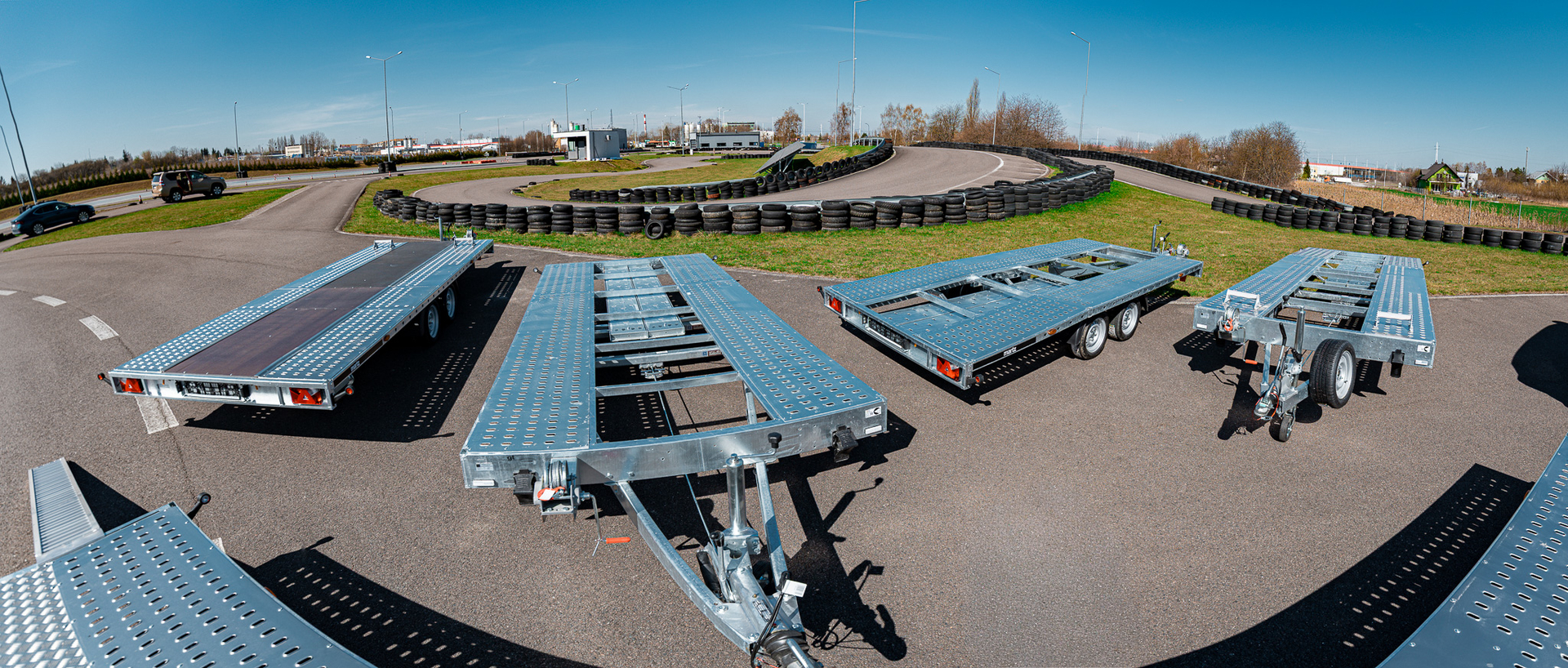
Thanks to the option of adding optional equipment, including aluminum side panels in select configurations, the GT UNIVERSAL series can be used for a variety of transport tasks.
The MARTZ GT PLATEAU, on the other hand, is a fixed-deck transport platform that is ideal for the regular transport of cars. For example, the GT PLATEAU 400/2 S 2.7T model features a welded structure, ramps that retract beneath the transport surface, and strap attachment points in the frame stringers.
Depending on the model, additional features are also available that enhance the trailer's functionality.
Both solutions address different user needs. If you’re looking for a tilting platform that makes loading easier, the GT UNIVERSAL is worth considering. If, on the other hand, you’re looking for a classic, versatile platform with separate ramps, the GT PLATEAU might be an interesting choice.
Before making a purchase, you should always compare the gross vehicle weight rating (GVWR), actual payload capacity, and dimensions of a specific trailer model with the specifications of the vehicle you plan to tow.
Safe Car Transportation in Winter Conditions
Even the best-suited tow truck requires proper preparation before departure. During the fall and winter seasons, it is especially important to check the technical condition of the trailer and the conditions under which loading takes place.
Before setting out on a trip, it’s a good idea to check the condition of the tires, the tire pressure, the lighting, the connection to the towing vehicle, and the condition of the braking system, if the trailer is equipped with one. You should also inspect the mechanisms for lowering and tilting the platform. Moisture, mud, and road salt can negatively affect the operation of individual components, which is why regular inspections are particularly important.
Loading should take place on a stable, as level a surface as possible. Wet leaves, snow, or ice can reduce tire traction and make it difficult to drive onto the tow truck. Before beginning the loading process, secure the vehicle to prevent it from moving and properly prepare the ramps or the tilting platform in accordance with the manufacturer’s instructions.
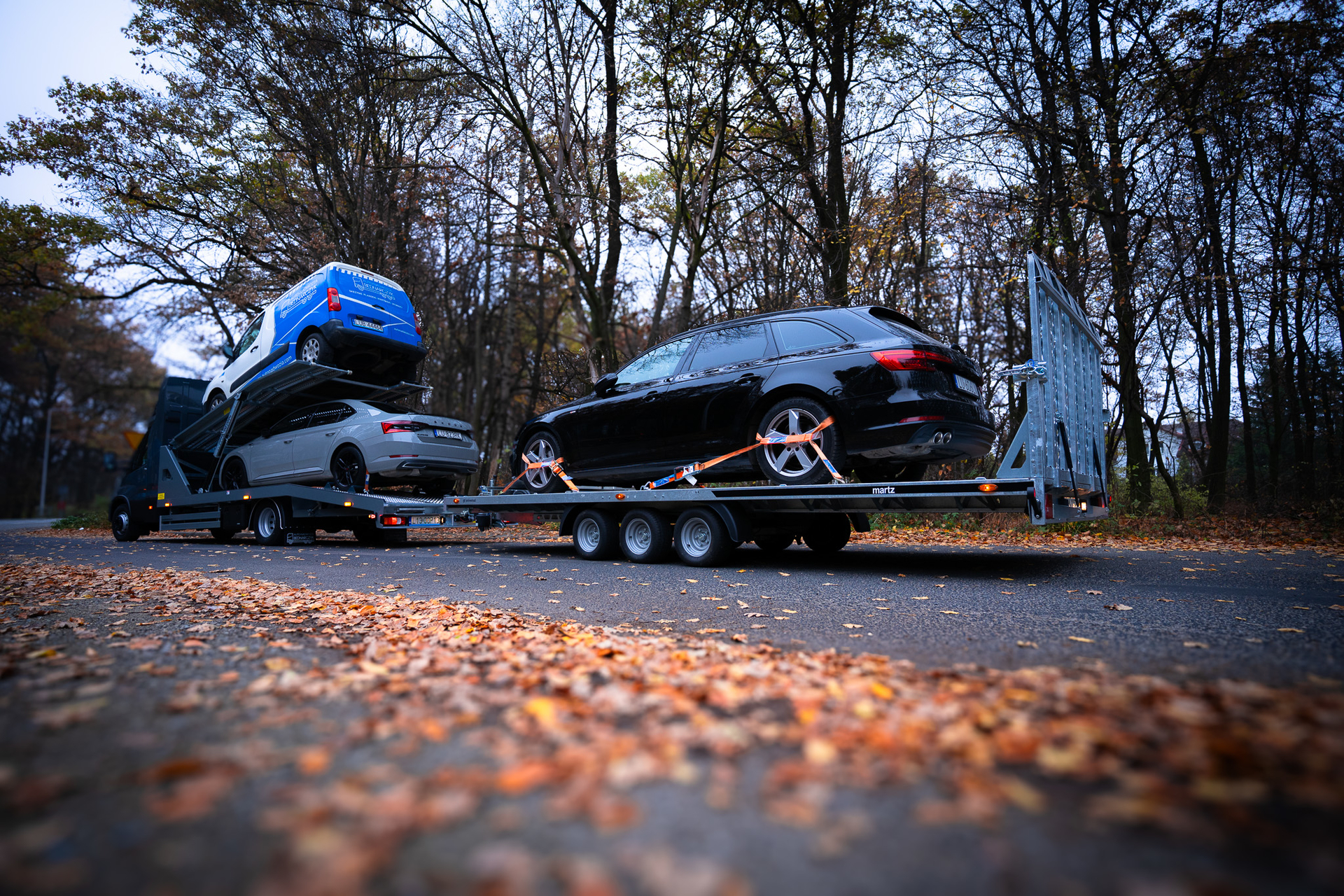
It is equally important to properly secure the car being transported. The vehicle should be secured using appropriately selected transport straps, taking advantage of the tie-down points provided for this purpose. The parking brake of the car being transported alone is not sufficient to secure it.
It is also important to ensure that the weight is properly distributed on the trailer bed. The trailer’s gross vehicle weight rating (GVWR) includes both its curb weight and the carried load; therefore, it should not be confused with its payload capacity. You must observe the maximum allowable coupling load, the specifications of the towing vehicle, and the limitations specified by the trailer manufacturer.
When driving with a loaded tow truck, adjust your speed and following distance from other vehicles to suit road conditions. Slippery surfaces and limited visibility require smoother braking, taking curves gently, and greater caution.
How do you take care of a tow truck after a winter trip?
Using a trailer in winter involves frequent exposure to water, mud, and road salt. That’s why, after completing a trip, it’s a good idea to spend a few minutes checking its condition. First and foremost, remove any accumulated dirt, especially from the undercarriage, structural components, and moving parts. It’s also a good idea to check the lights, electrical connections, and the condition of the fasteners.
Regular maintenance in accordance with the manufacturer’s instructions helps keep the trailer in good working order and prepare it for future tasks. If the trailer will not be used for an extended period of time, ensure that it is stored under appropriate conditions.
Discover the capabilities of the MARTZ GT UNIVERSAL and GT PLATEAU flatbed trailers and choose the model that will help you tackle your next transport jobs.
Choose the right car transporter for your needs
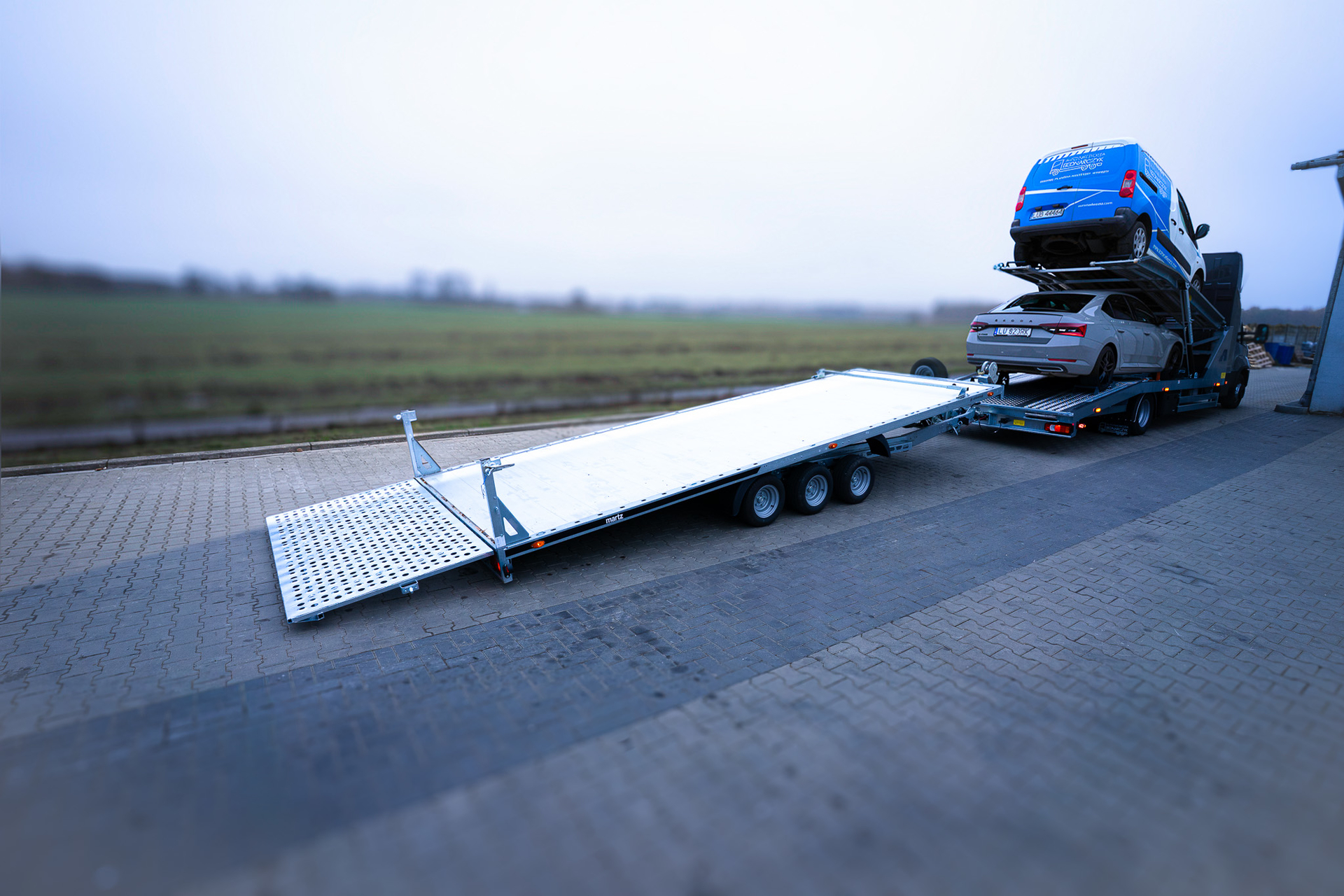
Discover two MARTZ car transporters with a GVWR of 3,500 kg. Compare a tilting platform with a traditional flatbed equipped with loading ramps and choose the right solution.
MARTZ GT UNIVERSAL
GT UNIVERSAL 500/2 S 3.5T
Car transporter with a hydraulically tilting platform
MARTZ GT PLATEAU
GT PLATEAU 500/2 S 3.5T
Fixed flatbed platform with separate loading ramps